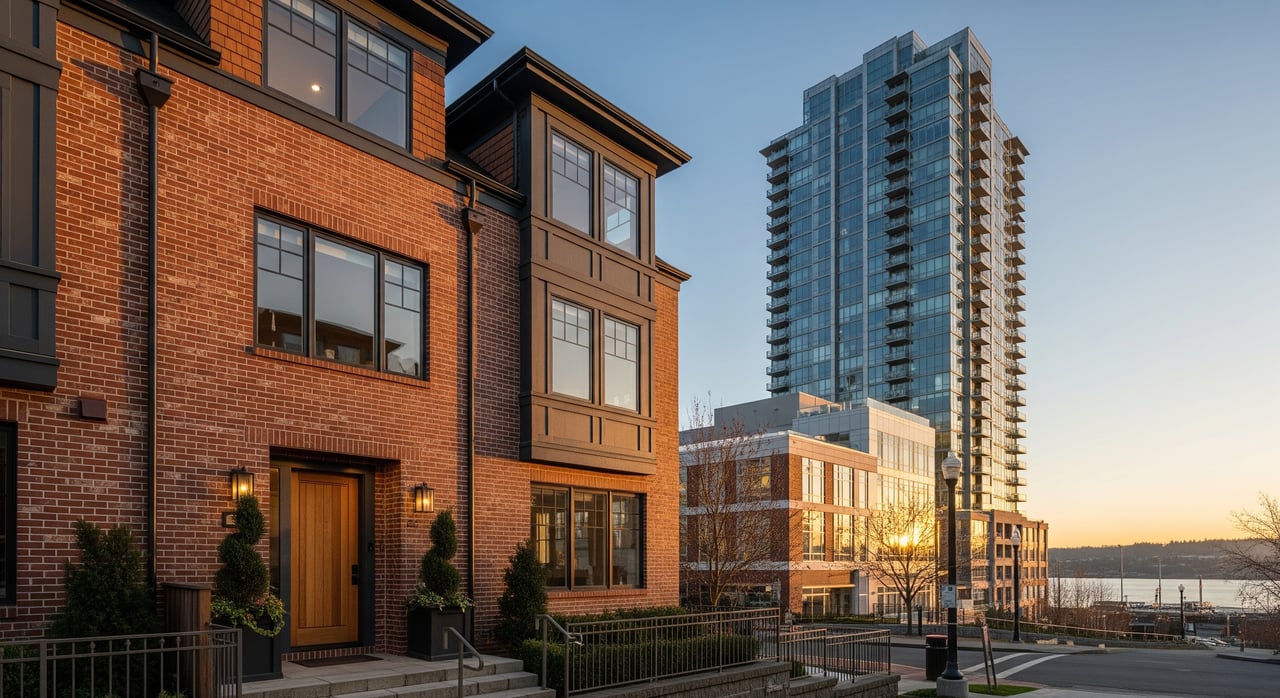
Thinking about an urban home in Downtown Vancouver but not sure whether a condo or a townhome fits you best? You are not alone. With the Waterfront and core streets offering both options, it can be tricky to compare lifestyle, costs, and long-term value. In this guide, you will learn the key differences that matter most, from ownership and maintenance to financing and resale. Let’s dive in.
Condo vs. townhome in Washington
Condo and townhome are often used together, but they are not the same. A condominium means you own your unit plus a shared interest in the building’s common areas. Condos in Washington are created and regulated under the Washington Condominium Act, which outlines how associations operate and the rights and responsibilities of owners. You can review the statute in the Washington Condominium Act, RCW 64.34.
A townhome describes a housing style, usually multi-level with a private entrance. Some townhomes are fee-simple, which means you own the structure and the land under it, much like a single-family home. Others are organized as condominiums, where ownership works more like a condo unit. The legal form determines who maintains what and how financing works, so it is important to confirm the exact setup for any property you consider.
Downtown Vancouver living at a glance
Downtown Vancouver is compact and walkable, with the Waterfront’s park and promenade drawing residents daily. The Waterfront area offers views, easy access to the riverfront path, and vibrant event energy. Learn more about the public spaces that anchor this lifestyle at Vancouver Waterfront Park.
Core streets in downtown deliver quick access to dining, coffee, services, and a short commute to local jobs. Transit is a strong plus. You can ride C-TRAN buses around the city and to regional connections, which reduces your reliance on a car depending on your exact location. Explore options at C-TRAN’s official site.
Space, privacy, and daily living
- Condos often offer single-level layouts with elevator access and shared amenities like a gym or rooftop deck. This is a great fit if you want low-maintenance living and easy access to community spaces.
- Townhomes typically provide multi-level living with a private entrance, more storage, and sometimes a small yard or rooftop deck. The layout can feel more house-like and may offer more privacy.
Townhomes usually have fewer shared walls across primary living areas, which can mean less foot traffic outside your door. Condos may have more neighbors on your floor and shared corridors. If you prefer quieter side streets, a townhome can be appealing. If you love being close to amenities and want an easy lock-and-leave setup, a condo can be a strong choice.
Who fixes what and what you pay
Understanding maintenance responsibilities is the biggest practical difference between condos and fee-simple townhomes.
- Condos: The association usually handles exterior upkeep, roofing, building systems, common areas, and landscaping. Your monthly dues help fund these services and future repairs. This can make costs more predictable but ties your experience to the quality of HOA management and reserve planning.
- Townhomes: Many fee-simple townhome owners maintain their own exterior, roof, and small yard unless the HOA documents say otherwise. Monthly dues may be lower, but you will manage more repairs and may face larger one-time expenses when roofs or paint need attention.
Both condos and townhome communities can levy special assessments to pay for large projects. When you shop, always review the budget, reserve study, and recent meeting minutes to see how the association plans for major expenses. Healthy reserves reduce the risk of surprise costs.
HOA fees, reserves, and assessments
In Downtown Vancouver, dues vary by building age, amenity level, and management. Waterfront condo buildings often have more complex systems and amenities, which can increase fees. In any community, focus on these items when you review documents:
- Monthly assessment and operating budget
- Reserve study and funding level
- History of special assessments
- Planned capital projects and timelines
- Insurance coverage and the master policy deductible
A well-funded reserve study and documented maintenance plan are positive signs. If reserves are low or big projects are coming soon, build that into your budget or consider alternatives.
Parking, storage, and pet policies
Parking and storage are limited resources in urban settings. Condos may offer assigned spaces or leased options, plus storage lockers. Some townhomes include private garages or parking pads that add day-to-day convenience and extra storage.
Pet rules vary. Some associations limit the number, size, or breed of pets. Others are more flexible. Always confirm pet policies, guest parking rules, and any related fees in the CC&Rs and rules before you write an offer.
Financing: what to know in Vancouver
Financing often feels simpler for fee-simple townhomes since lenders typically treat them like single-family homes. Condos can require additional checks. Lenders may look at owner-occupancy ratios, HOA delinquency rates, litigation, and the building’s financial health before approving a loan.
If you plan to use FHA or VA financing, ask early whether the condo project is eligible. FHA loans may require project approval at the building level. You can learn more from the HUD page on condominium approvals. VA borrowers can check project eligibility resources at the VA approved condominium page. If a project is not approved, your loan options may be limited or you may need a different financing path.
Insurance and risk planning
Condo owners typically carry an HO-6 policy that covers personal property, interior finishes, and liability. The association’s master policy covers the building exterior and common areas. Ask your insurance agent about any gaps and the master policy deductible.
Townhome owners may need broader coverage for the structure and exterior if they are responsible for those elements. The correct policy type depends on the legal form, so verify with your agent after reviewing the HOA documents.
Given Downtown Vancouver’s proximity to the river, it is wise to check flood risk for specific addresses. You can look up flood zones at the FEMA Flood Map Service Center. Earthquake coverage is not included in standard homeowner policies in the Pacific Northwest. Ask your agent about options if that risk matters to you.
Resale and long-term value
Downtown Vancouver attracts a wide buyer pool that values walkability, waterfront access, transit, and proximity to Portland jobs. Condos often appeal to buyers who prefer low-maintenance living, elevator access, and shared amenities. Townhomes tend to attract buyers seeking more space and a home-like layout with fewer shared spaces.
Resale performance depends on building condition, HOA health, and current market conditions. Well-managed communities with strong reserves and clear maintenance plans generally see better buyer confidence. Rental and pet rules also affect demand. If owner-occupancy ratios are high and rentals are controlled, lenders may view the project more favorably, which can support resale.
Due diligence checklist for Vancouver buyers
Use this quick, actionable list when you are ready to compare properties:
- Ownership and maintenance
- Confirm legal form: condo vs fee-simple townhome.
- Identify who maintains exterior, roof, and common areas.
- Association documents
- Review CC&Rs, bylaws, rules, recent meeting minutes, operating budget, and reserve study.
- Check history of special assessments, planned capital projects, and any litigation.
- Financing
- Ask your lender about condo project requirements, owner-occupancy ratios, and any FHA or VA approval needs.
- Insurance
- Review the master policy, coverage limits, and master deductible. Discuss HO-6 vs HO-3 needs with your agent.
- Practical living
- Confirm parking allocation and fees, guest parking rules, storage availability, pet restrictions, and any move-in fees or elevator reservations.
- Building condition
- Inspect roof age, building envelope, mechanical systems, and utilities. Pay extra attention in older or waterfront buildings.
- Location context
- Check flood maps for the address and note any planned nearby development that could affect views, noise, or traffic.
Which is right for you? A quick guide
Choose a condo if you want:
- Minimal exterior maintenance and shared amenities like gyms or rooftop decks
- Single-level living with elevator access
- A lock-and-leave lifestyle near the Waterfront or core streets
Choose a townhome if you want:
- More interior space and storage, plus a private entrance
- Lower monthly HOA dues in many cases, with more control over your maintenance schedule
- A home-like layout on quieter side streets
There is no one-size answer. Focus on your daily routine, budget for ongoing costs, and the association’s financial health. The right fit will support your lifestyle today and your plans for tomorrow.
Local resources to help your search
- City context and waterfront plans: Explore the waterfront’s amenities and parks at the Vancouver Waterfront Park page.
- Transit and commuting: Review routes and schedules at C-TRAN.
- Property taxes and parcel data: Look up parcel details with the Clark County Assessor.
- Flood risk check: Verify address-specific zones at the FEMA Flood Map Service Center.
- Condo legal framework: Read the Washington Condominium Act, RCW 64.34.
- FHA and VA condo eligibility: See project approval info at HUD’s condominium page and the VA approved condominium page.
Ready to compare specific properties or request HOA documents early in your search? A local, client-first advisor can help you weigh tradeoffs and choose with confidence.
If you want a calm, clear path to the right home in Downtown Vancouver, reach out. You will get hyperlocal guidance, document review support, and a plan that fits your budget and lifestyle. Start the conversation with LeAnne Moore.
FAQs
What is the key difference between condo and townhome ownership in Downtown Vancouver?
- Condos involve owning a unit plus shared common areas, while many townhomes are fee-simple and include ownership of the structure and lot, which changes maintenance and financing.
How do HOA fees typically compare for Vancouver Waterfront condos vs. townhomes?
- Waterfront condos often have higher dues due to amenities and complex systems, while townhomes may have lower dues but more owner-responsible maintenance costs.
What should Vancouver buyers know about financing a condo vs. a townhome?
- Lenders scrutinize condo projects for owner-occupancy, litigation, and financial health, and FHA or VA loans may require project approval, while fee-simple townhomes are usually financed like single-family homes.
Are pets commonly allowed in Downtown Vancouver condos and townhomes?
- Many associations allow pets with rules on number, size, or breed, so always review the CC&Rs and community rules for specific restrictions before you offer.
Do I need flood or earthquake insurance near the Vancouver Waterfront?
- Check the FEMA flood map for any address and consult your insurance agent, since flood is separate coverage and earthquake protection is not included in standard policies in the Pacific Northwest.