Thinking about trading a Portland-area suburb for more land, more privacy, and a slower daily rhythm? If Brush Prairie has caught your attention, you are not alone. For many buyers, the appeal is simple: more room to spread out without leaving the greater Vancouver-Portland region behind. This guide will help you understand what “more space” really looks like in Brush Prairie, what tradeoffs come with it, and how to decide if the move fits your lifestyle. Let’s dive in.
Brush Prairie Feels Different by Design
If you are coming from a traditional suburb, Brush Prairie may feel less like a subdivision and more like a rural residential hub. That is because Clark County identifies Brush Prairie as one of its rural centers, which are intended to support rural lifestyles outside urban growth areas.
In practical terms, that usually means you will see detached homes, more open land, and less of the uniform lot pattern common in denser Portland suburbs. County policy describes rural centers as places with small-lot development surrounded by rural landscape, with residential densities generally ranging from 1 unit per acre to 1 unit per 5 acres.
What “More Space” Usually Means
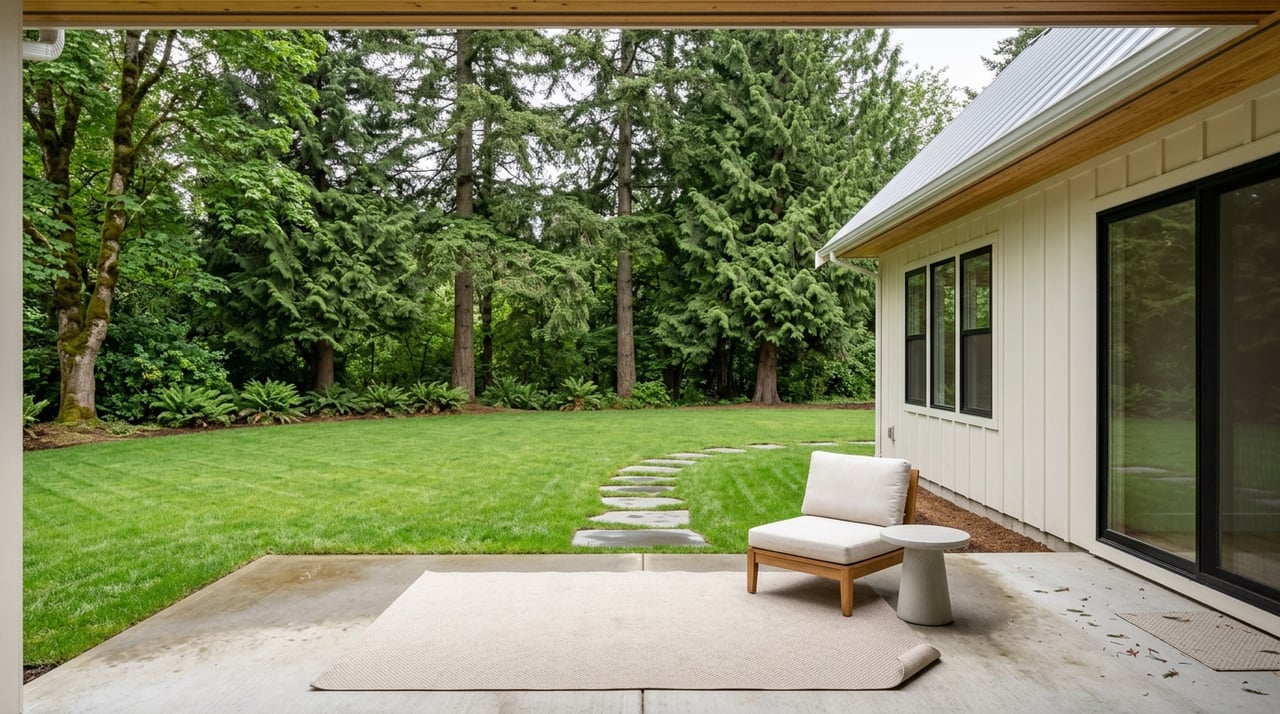
For many buyers, the biggest reason to consider Brush Prairie is land. Here, more space does not just mean a slightly bigger backyard. It can mean a very different property setup and a different way of living day to day.
According to recent county property records, Brush Prairie parcels can vary widely. Public records show examples around 1.04 acres, 2.5 acres, 5 acres, and even much larger holdings, while assessor sales records also reflect homes on roughly 1.13- to 5.46-acre parcels. That range is a useful reminder that Brush Prairie is not a one-size-fits-all market.
Lot sizes are less uniform
In a typical suburb, you can often expect a consistent pattern from one street to the next. In Brush Prairie, lot sizes and property layouts can shift quickly. One home may sit on just over an acre, while another nearby may offer several acres and a very different level of privacy.
Detached homes dominate the landscape
Brush Prairie is still largely detached single-family territory. If your goal is elbow room, outbuildings, separation from neighbors, or a more open visual setting, this area may offer a better match than a denser suburban neighborhood.
Utilities may require more due diligence
Clark County notes that new rural-area development outside rural centers generally relies on on-site septic unless public sewer is available, while rural centers may use community septic systems. That means buyers should go in with open eyes and ask detailed questions about the specific property, especially if you are used to more standard urban utility setups.
Brush Prairie Is a More Settled Market
Space is only part of the story. Brush Prairie also feels different because it is relatively established and lower turnover compared with many fast-moving suburban areas.
The Census Reporter profile for Brush Prairie shows 2,526 residents across 7.7 square miles, with 328.8 people per square mile. The same profile reports a median age of 49.6, median household income of $122,827, median owner-occupied home value of $568,000, and just 7.5% of residents moving in the prior year.
Those numbers suggest a homeowner-heavy area where people often stay put longer. If you want a place that feels less transient and more rooted, that may be part of Brush Prairie’s appeal.
Daily Life Has a Slower Rhythm
If you are leaving a Portland suburb, it helps to reset expectations about pace and convenience. Brush Prairie is not built around urban-style service levels. Clark County’s rural-center framework emphasizes open land, agriculture, forestry, recreation, and convenience services rather than a full urban amenity pattern.
That slower rhythm can be a positive if you are craving breathing room. It can also require more planning for errands, commuting, and everyday routines.
Outdoor access is part of the lifestyle
Public investment in open space helps support the area’s rural character. Curtin Creek Community Park is under construction and expected to open in spring 2026, with 16 acres of park development and the remainder preserved in the Gaddis Wetlands Natural Area.
For current outdoor access, the same county update notes that the Gordy Jolma Family Natural Area is already open for walking, birdwatching, and other low-impact recreation. If you value room to get outside without the feel of a heavily built-out suburb, that matters.
The Portland Commute Is the Real Tradeoff
For many buyers, this is the make-or-break issue. Brush Prairie can offer more land and privacy, but it usually comes with a more car-dependent routine.
Brush Prairie sits in the SR 503 corridor. According to WSDOT’s SR 503 corridor plan, the route connects Vancouver, Battle Ground, and surrounding communities, serves local commuters and freight, and carried about 19,000 to 32,000 vehicles per day in 2019. WSDOT also notes that growth through Battle Ground and Brush Prairie is increasing demand in the corridor.
That means your travel pattern is likely to feel regional rather than neighborhood-based. Instead of quick hops through a dense street grid, you are more likely to rely on a highway network and a drive-first routine.
Most households should expect to drive
WSDOT’s SR 502 corridor plan says SR 502 connects Battle Ground to I-5 and that commuters from Battle Ground and surrounding communities travel to major employment centers in Vancouver and Portland. For many Brush Prairie residents, that is the practical reality behind the lifestyle upgrade.
If you work in Portland, the question is not just whether the drive is possible. It is whether the extra time in the car feels worth the added space at home.
Transit exists, but it is layered
Brush Prairie is not cut off from transit, but it is not a doorstep-transit setting either. C-TRAN Route 7 runs between Van Mall Transit Center and Battle Ground with frequent weekday service, and C-TRAN says The Current now serves Battle Ground seven days a week and improves Route 7 connections.
From Vancouver, C-TRAN also offers regional and express service toward Portland on select routes. For some buyers, that creates flexibility. For others, it still reinforces that Brush Prairie works best when you are comfortable with a car-first lifestyle.
Who Tends to Like Brush Prairie Most
Brush Prairie is not the right fit for everyone, and that is exactly why it works so well for the right buyer. Based on county policy, parcel patterns, and local demographic data, the area often makes the most sense for buyers who want to prioritize space over close-in convenience.
You may be a strong fit if you are looking for:
- More acreage than you can typically find in a Portland suburb
- A detached home setting with more separation between properties
- A quieter, more established area with lower turnover
- Outdoor access and open-land surroundings
- A home that supports longer-term living rather than a short stopover
You may need to think more carefully if you want:
- A highly walkable daily routine
- Urban-style convenience at your doorstep
- A short, simple commute into Portland
- A more uniform neighborhood feel and lot pattern
Key Questions to Ask Before You Move
The best Brush Prairie move is an informed one. If you are comparing this area to a Portland suburb, keep your home search focused on the details that shape everyday life.
Ask questions like:
- How much land do you actually want to maintain?
- What kind of commute are you comfortable with several days a week?
- Does the property use septic or another utility setup that needs added review?
- Do you want a more settled area, even if that means fewer homes come available?
- Are you looking for privacy and flexibility more than nearby retail and services?
These are not small questions. They are often the difference between loving the lifestyle and feeling surprised by it.
Why Local Guidance Matters Here
Brush Prairie is not a plug-and-play suburb. Property sizes vary. Utility considerations can differ from home to home. Commute patterns are more nuanced than they look on a map.
That is why local guidance matters. When you are weighing a move from a Portland suburb into a more rural residential setting, you need more than a saved search. You need clear advice on property fit, neighborhood context, and the practical tradeoffs behind the listing photos.
If you are considering a move to Brush Prairie or planning a sale in Clark County, LeAnne Moore can help you compare options, understand the market, and make a confident next move.
FAQs
Is Brush Prairie, Washington, considered a Portland suburb?
- Not in the typical sense. Clark County identifies Brush Prairie as a rural center outside urban growth areas, which gives it a more rural residential feel than a conventional suburb.
What are lot sizes like in Brush Prairie, Washington?
- Lot sizes can vary widely. County property records show examples from about 1 acre to 5 acres and beyond, so the market is much less uniform than a typical suburban neighborhood.
Is Brush Prairie, Washington, good for buyers who want more land?
- It can be a strong fit if you want a detached home with more privacy, open surroundings, and potentially much more acreage than you would usually find in a denser suburb.
How do most people commute from Brush Prairie, Washington?
- Many households rely on a car-first routine using the SR 503 and SR 502 corridors for access to Vancouver and Portland employment centers.
Does Brush Prairie, Washington, have transit options?
- Yes. C-TRAN Route 7 connects Battle Ground and Van Mall Transit Center, and additional regional and express transit connections are available from Vancouver toward Portland.
What should buyers check when purchasing a home in Brush Prairie, Washington?
- Buyers should review the specific property’s lot size, utility setup, commute implications, and how well the home’s rural residential setting matches their day-to-day lifestyle needs.